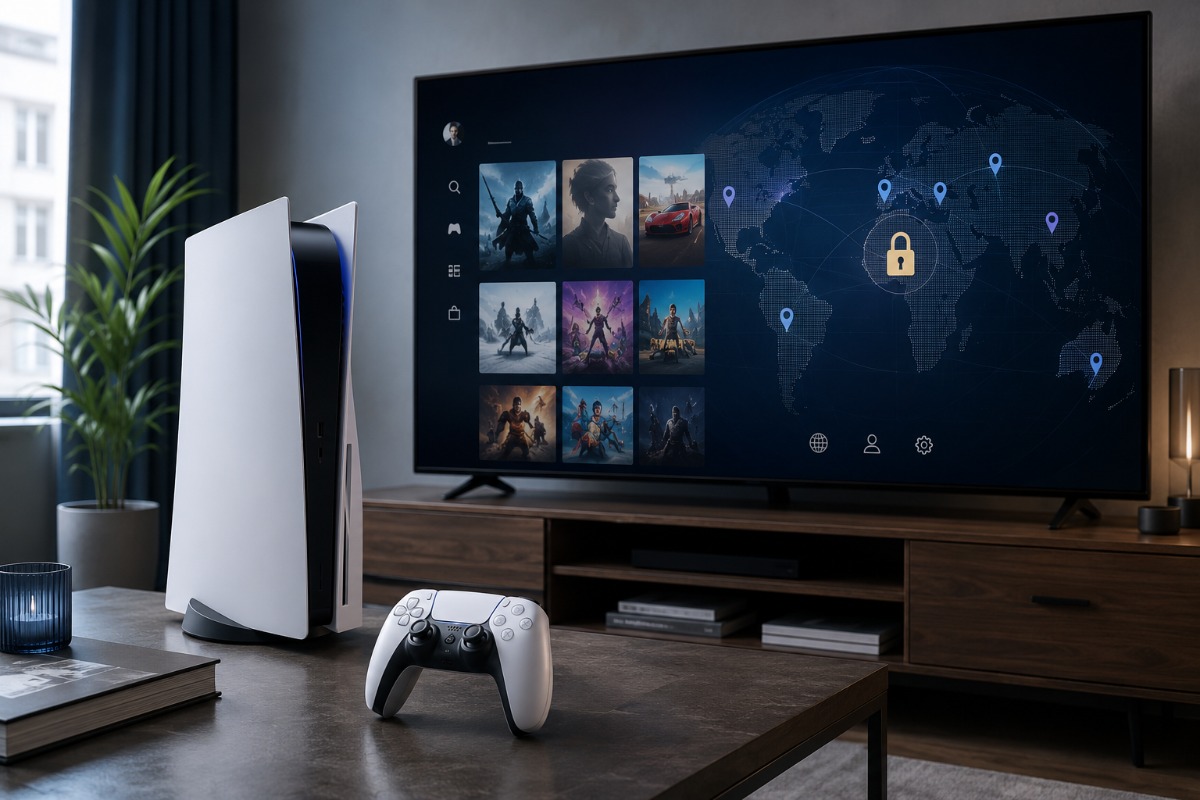
PlayStation region locks: Sony’s 2028 shift away from new physical discs turns an old PSN account rule into a serious ownership problem for players who move countries.
When Sony announced on the PlayStation Blog on July 1 that it will stop producing physical PlayStation game discs for new releases by January 2028, players immediately focused on the loss of boxes, resale value, and shelf collections. But the deeper problem is less visible. It sits inside PlayStation Network accounts.
PSN accounts remain tied to the country or region chosen when they are created. Sony says users cannot change that country or region later. That means store access, vouchers, payment methods, support, and some services stay locked to the original account location. Sony has enforced this rule for years, but the 2028 digital shift turns a minor annoyance into a much larger ownership risk.
The biggest threat is not just the death of physical media. It is that your library, region, payment data, and access rights all sit inside a single account that does not travel cleanly.
Crossing Borders Breaks Your Game Library
A disc is easy to understand. If someone buys a physical game in the United States and later moves to the United Kingdom, the disc still works as an object they own and can keep.
Digital libraries are more complicated. In practice, moving countries with a PSN account can force players to choose between keeping their old games and buying new ones. A US worker who moves to the UK may still have games tied to a US account. But Sony’s store system can block that account from using a UK credit card for new purchases.
“I’ve moved from New Zealand to Australia… now I have an Australian card but I’m not able to add it,” one affected player wrote.
That is the real world version of the policy problem. Some players buy region specific gift cards from third party sellers just to keep purchasing games on their main profile. Others create a new regional PSN account for future purchases.
Creating a new account solves the billing problem. However, it also splits the player’s identity. The old library, friends list, trophies, subscriptions, and purchase history do not move cleanly into the new account.
Keeping Old Games Also Requires Account Maintenance
Even if players stop buying new games in a new country, keeping an old digital library alive still depends on account access. That is where the ownership debate becomes sharper.
Sony’s UK terms allow the company to close accounts unused for 36 months after notice, and even if local rules vary, the warning is clear: your digital library lives inside an account that must remain active.
That is the part discs never had to solve. A forgotten physical game in a drawer still exists. A forgotten digital purchase depends on email access, passwords, platform policy, store records, and regional account rules.
Sony’s pivot to digital is not just about cutting disc manufacturing costs. It gives the company tighter control over storefront economics, regional pricing, licensing, and distribution. That power can make the business cleaner for Sony, but it also leaves players locked into whatever terms their local PSN store dictates.
Sony Is Lagging Behind The Account Reality
Sony’s direct peers already handle region movement more cleanly in many cases. Apple, Google, and Microsoft’s Xbox systems all offer ways to change store region, billing country, or account location under certain conditions. The process can still be messy, but the basic idea exists: people move, and digital accounts need to move with them.
A proper PSN migration tool would not be simple. Sony would need fraud checks, tax handling, publisher licensing rules, regional pricing controls, and age rating compliance. None of that excuses leaving legitimate users stuck with account workarounds.
PlayStation wants players to treat digital libraries as permanent collections. To earn that trust, Sony must build account rules that are modern, portable, and fair. The end of new PlayStation discs is a format change. The region lock problem is the real test of digital ownership.
Also Read: Black Flag Resynced: The PS5 Pro Finally Gets Its 60 FPS Showcase

Anup Singh is an independent technology journalist and content writer covering Apple, Android, AI, laptops, gaming, and the consumer tech industry. He focuses on delivering factual, well researched, and easy to understand reporting while explaining how new technologies impact everyday users.
2 thoughts on “As PlayStation Discs Die, Sony’s Region Locks Threaten Your Digital Library”