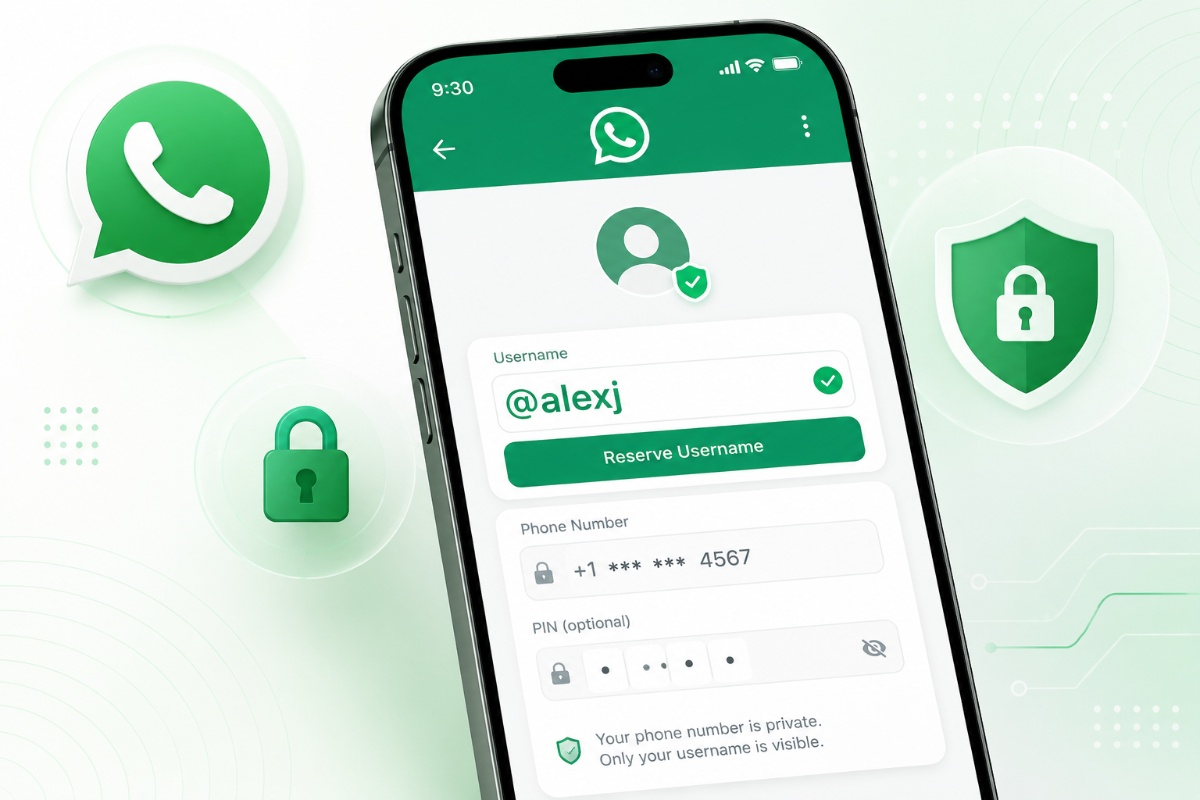
WhatsApp username reservations: The app is preparing a 2026 privacy rollout that will let users connect without handing out their personal numbers.
For over a decade, using WhatsApp meant handing over your personal phone number to anyone you wanted to message. That is finally changing. WhatsApp has started opening username reservations. This lets users claim preferred handles before the feature fully launches later in 2026. The app will still require a phone number for account creation and recovery. The important change is what users need to share with new contacts. Instead of giving a number to a stranger, online buyer, event contact or temporary group member, they will be able to share a username.
What The Username Reservation System Does
The reservation system lets users claim a preferred WhatsApp username before the full contact feature becomes widely available. This matters because WhatsApp has more than 3 billion users. Opening the username system all at once would invite confusion, impersonation and handle squatting.
For regular users, the process helps protect familiar names before demand surges. For businesses and creators, it has another purpose. Meta is allowing eligible accounts to claim existing Instagram and Facebook handles so their identity can stay consistent across its apps. That helps brands, public figures and creators avoid lookalike accounts before usernames become a normal part of WhatsApp.
Usernames are not just convenient labels. They act as public identity markers inside an app that has historically been built around private phone numbers. That makes the reservation phase a practical safeguard, not just an early preview.
How It Changes Everyday Privacy
When the feature launches, users can share a username instead of their phone number with new contacts. Existing contacts will still see numbers they already have. The update acts as a shield for new interactions, not a retroactive privacy reset for older chats.
That distinction matters in real life. WhatsApp is widely used for apartment hunting, deliveries, local selling, school groups, workplace chats and large community groups. In those spaces, hundreds of strangers can sometimes see or scrape phone numbers. A username gives users a less sensitive way to be reached.
Why The Reservation Window Matters
Some users have questioned why WhatsApp needs a reservation system at all. One commenter on Meta Newsroom’s Facebook post asked why users cannot simply choose a name when the feature launches. The question is fair, but it overlooks the scale of the rollout.
At WhatsApp’s size, a free claim system would quickly create battles over common names, celebrity names, brand names and creator handles. It would also give impersonators a head start. A reservation window gives WhatsApp more control before usernames become part of everyday messaging.
The decision also reflects a broader shift in messaging apps. Phone numbers are useful for account recovery and contact discovery, but they are not ideal for every interaction. A username gives users more control over how much personal information they reveal.
The 4 Digit Username Key Adds Another Filter
WhatsApp is also building an optional username key. This is a 4 digit PIN that a user can attach to their username. If enabled, someone would need both the username and the PIN to start a new chat.
That extra step could reduce unwanted messages if a username gets shared too widely. Spammers will still try to guess handles, but no public search and an optional PIN make cold messaging harder.
The feature does not make WhatsApp anonymous. Phone numbers remain part of the account system. What it changes is exposure. Users can save their phone number for the people who actually need it.
What Comes Next
The full username feature is expected later in 2026, with availability likely to vary by app version and region. Users who see the reservation option can claim a handle through account settings.
The larger shift is clear. WhatsApp is not replacing phone numbers as its foundation. It is reducing how often users need to reveal them. For an app that sits at the center of daily communication in many countries, that is a practical privacy change with real consequences for personal contact sharing.
Also Read: Lenovo’s $1,599 Legion 5i Deal Brings OLED And RTX 5070 To The Midrange

Anup Singh is an independent technology journalist and content writer covering Apple, Android, AI, laptops, gaming, and the consumer tech industry. He focuses on delivering factual, well researched, and easy to understand reporting while explaining how new technologies impact everyday users.