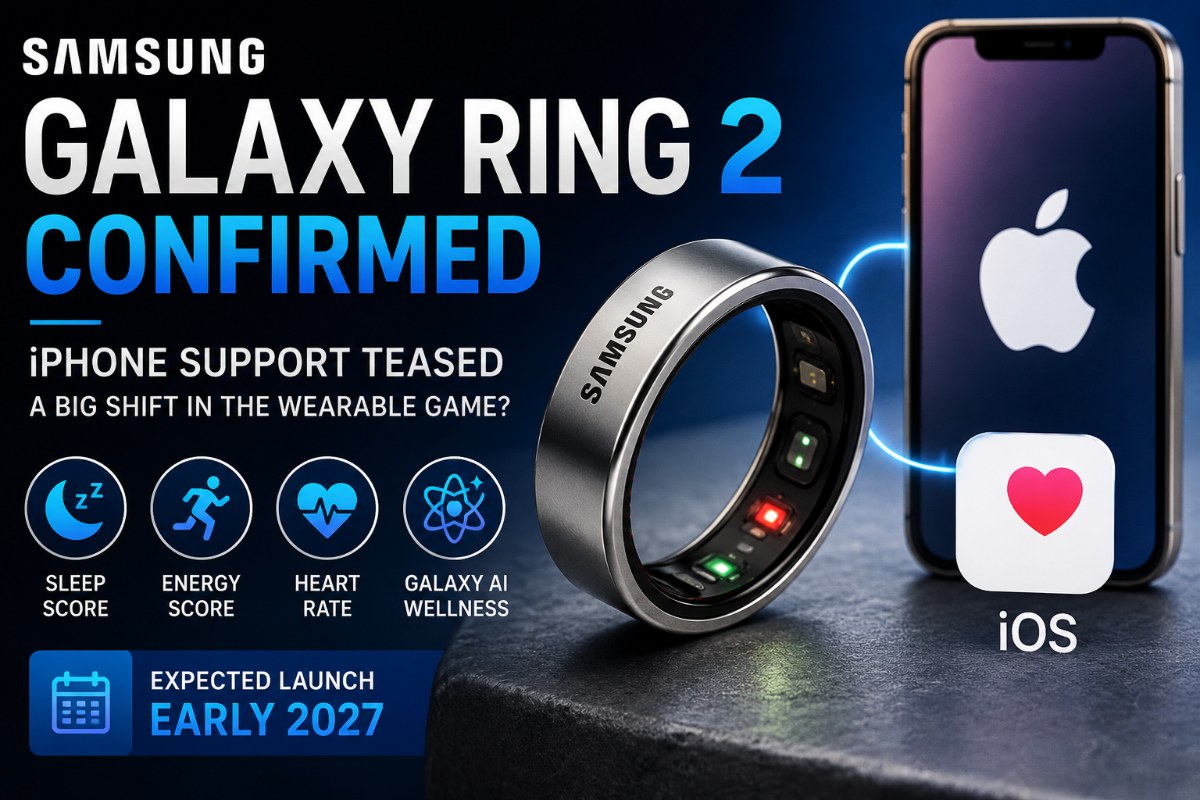
Galaxy Ring 2 Confirmed: Samsung has confirmed its next smart ring is in development, but the bigger story may be whether Galaxy Ring 2 breaks out of the Android-only lane.
Samsung has officially confirmed the Galaxy Ring 2 is in development, but the most important upgrade may not sit inside the ring at all. The bigger question is whether Samsung plans to let its next smart ring work with iPhones.
The original Galaxy Ring kept its strongest health features tied to Android, Samsung Health, and the wider Galaxy ecosystem. That approach made sense for a first-generation wearable built to support Galaxy phones and watches. It also narrowed the product’s reach in a category where Oura has already shown that broad phone support can pull in a wider audience.
Galaxy Ring 2 now enters a more crowded and less forgiving market. Oura Ring 5 has raised expectations around comfort, battery life, and app-based health guidance. Apple still does not sell a smart ring, but rumors of an Apple ring continue to circulate. Samsung now has a window to reach iPhone users before Apple decides whether to enter the category.
iPhone Support Breaks Samsung’s Usual Wearable Rule
Samsung usually uses accessories to make Galaxy phones more valuable. Galaxy Buds, Galaxy Watches, and the first Galaxy Ring all work best when users stay inside Samsung’s ecosystem.
A smart ring changes that calculation. It does not depend on notifications, apps, or a screen in the same way a smartwatch does. People buy it mainly for sleep tracking, recovery data, and passive health monitoring. That makes phone compatibility more important than brand loyalty.
If Samsung adds iPhone support, it breaks one of its usual wearable rules. The company could still keep advanced Galaxy features exclusive, but even partial iOS support opens the door to users who want sleep and recovery data without wearing a bulky watch to bed.
Apple adds urgency to that decision. The company has no confirmed smart ring, but persistent rumors keep the idea alive. If Apple enters the market, it brings deep iPhone integration from day 1. Samsung can use Galaxy Ring 2 to reach those users first.
Galaxy AI Now Carries The Smart Ring Fight
Hardware no longer carries the smart ring fight by itself. Optical sensors across the industry have largely reached parity. The real difference now comes from how each company explains the data.
Samsung already owns important pieces of that system through Samsung Health and its wider Galaxy AI push. Energy Score uses sleep, activity, and heart data to estimate daily readiness. Sleep Score helps users understand rest quality. Personalized Wellness Tips use AI-driven analysis to turn raw health numbers into clearer daily guidance. SmartThings integration also gives Samsung a way to connect wearables with the home, though that idea still needs clearer everyday value.
That Galaxy AI layer explains why Galaxy Ring 2 matters beyond size or sensors. A ring does not help much by simply recording heart rate. It becomes useful when it tells users whether their recovery is improving, whether sleep habits are slipping, or whether they should adjust activity for the day.
This is where Samsung can separate the ring from basic fitness tracking. If Galaxy AI can make the ring feel like a quiet health assistant rather than a passive data collector, the product has a clearer reason to exist beside a smartwatch.
Samsung digital health chief Hon Pak has recently been talking up the company’s broader health-wearable plans. His comments on iOS compatibility added fuel to the biggest question around the next ring.
Asked about iOS compatibility in a recent Forbes interview, Hon Pak said, “I’m smiling but I can’t say anything. I think you’ll be very pleased with some of the releases and the upcoming news.”
That answer confirms nothing. It does, however, keep iPhone support firmly in play as the most important unresolved Galaxy Ring 2 question.
Proving The Ring Is Not Just Another Thing To Charge
Samsung cannot ignore user skepticism. The first Galaxy Ring faced a simple buyer question: why pay premium money for a screenless tracker when a smartwatch already tracks many of the same things?
Early reaction around the next model points to the same concern. One user asked, “Who buys this?” Another summed it up as “Value for money.” The comments sound blunt, but they identify the problem Samsung must solve. A smart ring has to feel almost invisible while sleeping and still useful enough during the day to justify its price.
Galaxy Ring 2 needs a sharper pitch than the first model. It has to offer better overnight comfort than a watch, fewer distractions than a screen-based device, and health guidance that feels clear rather than decorative.
Oura has already trained users to expect polished wellness summaries, recovery scores, and strong battery life. Samsung brings scale, brand recognition, a large health platform, and Galaxy AI branding. Now it has to prove the ring can serve more than Galaxy loyalists.
Early 2027 Could Be The Real Ecosystem Test
The widely reported early 2027 launch window gives Samsung a clear timeline for this ecosystem fight. By then, the smart-ring market may look more crowded, more expensive, and more closely tied to phone platforms.
Software may drive the story, but hardware still decides whether people keep wearing the ring. A smartwatch can feel slightly bulky and still survive daily use. A ring that feels thick, tight, or awkward usually ends up unused.
Current leaks point to a thinner and lighter Galaxy Ring 2, improved sensor accuracy, redesigned skin-temperature sensors, and a battery target of 9 to 10 days. Samsung has not confirmed those details, but the rumored changes target the right pain points.
Battery life carries special weight. A health ring works best when users wear it overnight and through the next day. Charging gaps weaken sleep trends and recovery analysis. If Samsung pushes battery life closer to 10 days, it makes the ring easier to trust as a continuous health device.
Pushing into medical-grade health features also triggers strict regulatory reviews. Samsung can expand heart and temperature insights, but it must stay careful with claims that move beyond general wellness.
Samsung Needs A Less Locked-Down Ring
Galaxy Ring 2 now gives Samsung a chance to answer a bigger market question: can a Galaxy wearable win outside the Galaxy ecosystem?
The company has a strong foundation. Samsung Health keeps adding Galaxy AI tools. Galaxy phones and watches already feed the same wellness platform. The ring can improve overnight tracking because many users find it easier to sleep with than a smartwatch.
The risk sits in Samsung’s own strategy. If iPhone users receive a thin version of the experience, Samsung signals marketing, not openness. If non-Samsung Android users still lose key features, the same criticism follows the second-generation model.
Galaxy Ring 2 is no longer just a rumor. The product now carries a clear test for Samsung’s health ambitions. Better battery life and improved sensors will help, but they will not define the device. Samsung has to make the ring feel simple, comfortable, and open enough for users who do not already live inside the Galaxy ecosystem.
Also Read: Galaxy Z Flip 8 Camera Leak Points To Refinements Over Hardware Leaps
FAQs
Q. Is Galaxy Ring 2 confirmed?
Yes. Samsung has confirmed that a next-generation Galaxy Ring is in development, but it has not announced final specs, pricing, or a launch date.
Q. Will Galaxy Ring 2 work with iPhone?
Samsung has not confirmed iPhone support. Hon Pak’s comments suggest broader compatibility may be under consideration.
Q. When could Galaxy Ring 2 launch?
Current reports point to an early 2027 launch window. Samsung has not confirmed that timing.
Q. What new features could Galaxy Ring 2 have?
Leaks point to better battery life, improved comfort, stronger sensor accuracy, and redesigned skin-temperature sensors. Samsung has not confirmed these upgrades.
Q. Why does Galaxy AI matter for Galaxy Ring 2?
Galaxy AI could turn sleep, heart, activity, and recovery data into clearer wellness guidance. That software layer may matter more than raw sensor upgrades.

Anup Singh is an independent technology journalist and content writer covering Apple, Android, AI, laptops, gaming, and the consumer tech industry. He focuses on delivering factual, well researched, and easy to understand reporting while explaining how new technologies impact everyday users.