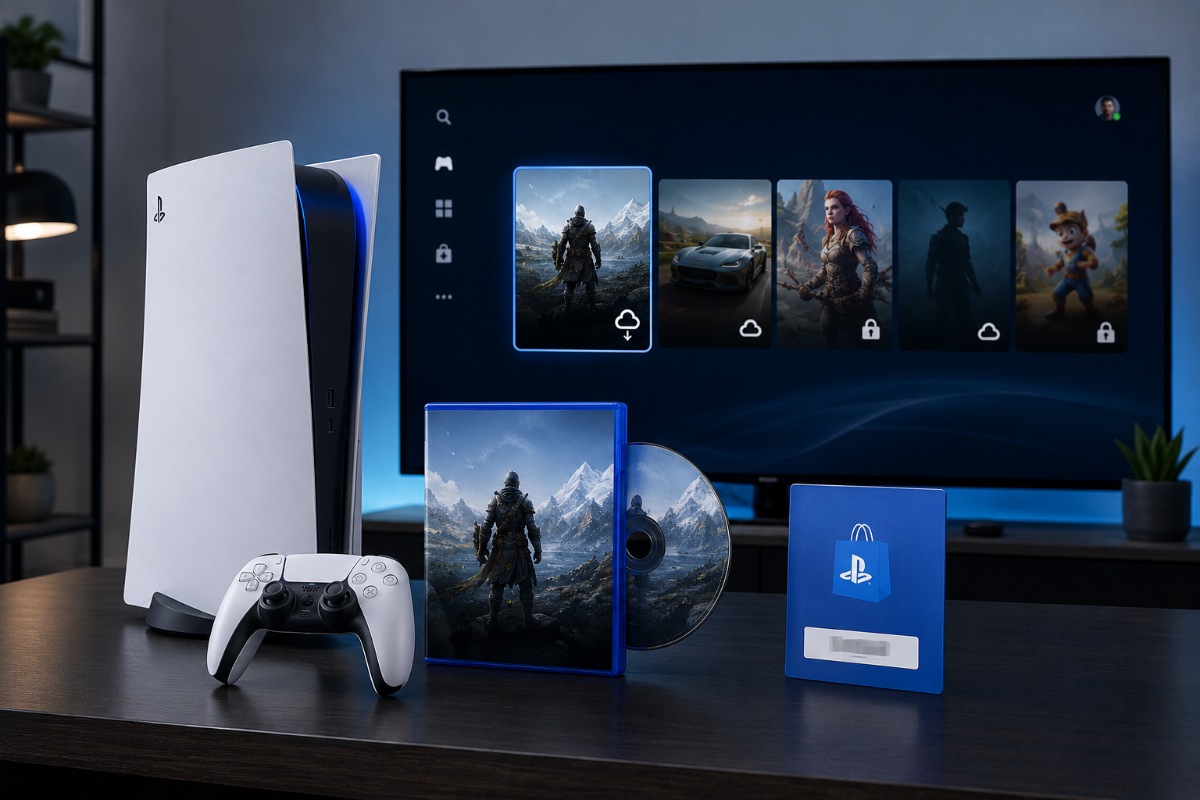
PlayStation Disc Cutoff: Sony says older PlayStation discs can still be reprinted after 2028, but new games are still moving toward digital licenses.
Sony just put a date on the end of new PlayStation discs: January 2028. The company has now clarified that publishers can still order physical copies of existing PlayStation games after that deadline, provided those games already launched on disc or are scheduled to do so before the cutoff. That protects back catalog titles, collector editions, and retail restocks. It does not change the larger shift. Sony will sell new PlayStation games exclusively in digital formats after January 2028. Stores can still carry PlayStation games, but many boxed products may become code in box purchases. A customer walks into a retailer, buys a case, and redeems a digital activation code instead of taking home a playable disc. Sony is effectively splitting its catalog in two. Older titles get a physical lifeline. Future releases move deeper into account based ownership.
Preserving The Back Catalog
The clarification matters because it prevents a worst case reading of Sony’s policy. Existing disc based PlayStation games are not being cut off from future manufacturing. Publishers can still request more copies after 2028, which keeps the door open for popular older games, budget reissues, and limited physical runs.
PlayStation communications executive Sid Shuman said, “This transition has no impact on games that already released, or will be releasing, prior to January 2028 in disc format.”
That is important for collectors and preservation groups, but it is not a reversal. Sony’s ultimate goal remains intact: ending physical media for brand new PlayStation games after 2028.
The hardware question is still separate. Sony has confirmed the software production cutoff. It has not confirmed that the next PlayStation console will ship without a disc drive. Many players are already treating the policy as a signal about PlayStation 6, but that remains speculation. The confirmed fact is narrower and still significant: new PlayStation games will stop being pressed on disc.
The 80 Percent Digital Tipping Point
Sony’s business logic is not hard to see. Digital downloads made up about 80% of Sony’s full game software sales in fiscal 2025. That is a huge change from the PlayStation 4 launch era. In 2013, Ampere Analysis estimated that only 13% of full game sales on Sony consoles were digital. The market has flipped in 12 years.
For Sony, the shift removes manufacturing costs, packaging, shipping, and retail risk. More importantly, it pulls buyers into a controlled storefront where used sales, lending, and independent resale do not exist. That gives Sony more pricing power and a closer relationship with every transaction.
Grand Theft Auto VI shows why the timing matters, but it should not be misread. There is no confirmed sign that Rockstar is using the game as an early break from discs. Its expected 2026 release still falls before Sony’s 2028 cutoff, which means it can still receive a traditional disc release. The wider point is about the retail market around it. Boxed codes, digital download cards, and account linked purchases are already becoming familiar. Sony’s policy turns that gradual shift into a fixed deadline.
The Real Cost For Players
Physical media is not perfect. Modern discs often require large day one patches, online checks, and server support. Still, a disc gives players a tangible asset. They can resell it, lend it, collect it, or preserve it when a storefront changes.
Digital ownership is weaker. It depends on an account, a license, a store policy, and server access. The Crew remains a sharp warning for players because Ubisoft’s shutdown triggered legal and consumer backlash over whether buyers truly owned the game they paid for. Ubisoft has argued that customers bought limited access, not full ownership.
That is why the reaction has been so forceful. Many players dismissed Sony’s clarification as stating the obvious, while others focused on the loss of trade ins and long term access. Preservationists see a bigger risk: once new games stop existing as discs, more of gaming history sits behind corporate servers, licensing agreements, and account systems.
Sony has solved one narrow confusion. Older PlayStation discs can survive after 2028. The larger reality is much harder for physical media supporters to accept. New PlayStation games are moving toward a future where ownership looks less like possession and more like permission.
Also Read: Sony’s Crowded July 9 Lineup Highlights A Growing PS5 Discovery Problem

Anup Singh is an independent technology journalist and content writer covering Apple, Android, AI, laptops, gaming, and the consumer tech industry. He focuses on delivering factual, well researched, and easy to understand reporting while explaining how new technologies impact everyday users.
1 thought on “Sony’s 2028 PlayStation Disc Cutoff Reignites Digital Ownership Debate”