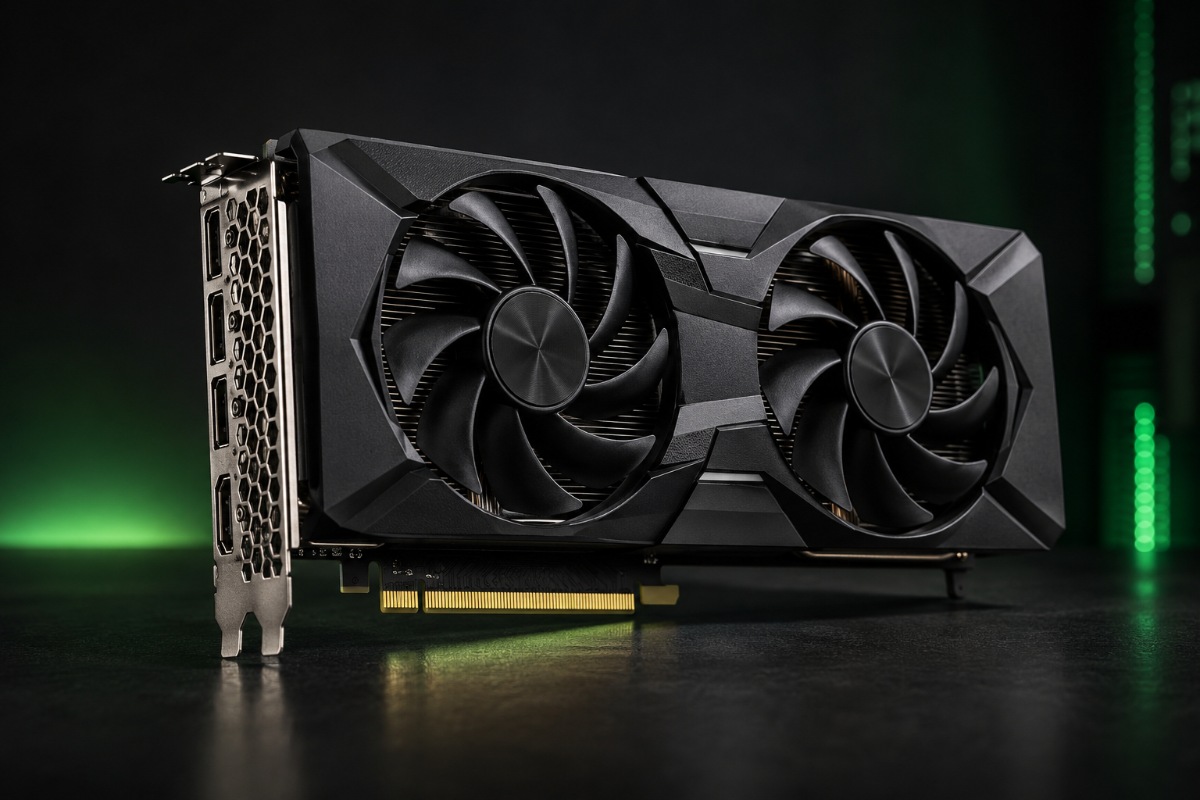
Gainward RTX 3060: The Python II OC revives Nvidia’s 2021 Ampere GPU in July 2026, betting that memory capacity can outweigh missing modern features.
Launching a graphics card with a 2021 processor sounds strange in July 2026. Gainward sees a reason to do it anyway. Its new GeForce RTX 3060 Python II OC pairs Nvidia’s 5 year old Ampere GPU with 12GB of GDDR6 memory, a capacity that remains useful for games, creative software and local AI tools.
The baseline hardware is familiar. The card has 3584 CUDA cores, a 192 bit memory bus, 360GB per second of bandwidth and a 1792MHz boost clock. It also provides 3 DisplayPort connections and 1 HDMI port.
Its factory overclock sits only 15MHz above Nvidia’s reference specification. Buyers should not expect the OC badge to deliver a visible performance jump. The logic behind resurrecting this card is straightforward: Gainward believes 12GB still gives the RTX 3060 a reason to exist.
Modern Workloads Keep Pushing Past 8GB
Gamers increasingly watch video memory as closely as raw processing speed. High resolution texture packs and demanding Unreal Engine 5 projects can fill an 8GB buffer quickly, leading to reduced texture quality or uneven performance.
Creative users face similar limits. Programs such as Adobe Premiere Pro and DaVinci Resolve can use larger memory pools when handling complex 4K timelines, effects and high resolution assets.
Local AI adds another reason to value capacity. Running an 8B Llama 3 model through Ollama or generating larger images in Stable Diffusion gives 12GB cards more breathing room than many entry level 8GB alternatives. Gainward leans directly into those use cases, saying the card “combines 12GB GDDR6 memory with factory overclocking” for gaming, creative work and local AI.
Buyers should not take that marketing pitch at face value. A large memory pool holds more textures, video data and model weights. It cannot completely hide the limits of an ageing GPU core.
Ampere Misses Newer Frame Generation Features
The RTX 3060 still supports ray tracing and DLSS Super Resolution. However, it cannot use the Frame Generation component of DLSS 3 or DLSS 4, which Nvidia reserves for RTX 40 and RTX 50 series hardware.
That gap matters in demanding games where generated frames can produce much higher displayed frame rates. Ampere also trails newer architectures in power efficiency and AI processing speed.
Gainward cannot modernize the underlying silicon, so it has focused on making the card easy to install and live with. The Python II OC measures 247.3mm long and 40.8mm thick, dimensions that should fit older Micro ATX cases and many prebuilt systems that cannot accommodate large 3 slot coolers.
Its compact 2 slot, dual fan cooler includes Zero RPM operation for silent use during browsing, video playback and other light workloads. That practical footprint may prove more useful to some buyers than the negligible factory overclock.
Price Will Decide Whether the Relaunch Makes Sense
Current U.S. retail pricing places the RTX 3060 at about $329 new and roughly $249 used. That gives Gainward a clear target.
A price near the used market level could attract budget gamers, creators and users experimenting with local AI. Anything close to faster current generation hardware would make the missing features and older architecture much harder to overlook.
The Python II OC will not break speed records. Gainward is banking on the reality that some budget conscious users value raw VRAM more than the latest silicon. That bet only works if the card reaches stores at a genuinely aggressive price.
Also Read: Lenovo Legion R9000P Debuts With TCL’s 240Hz Inkjet OLED Screen

Anup Singh is an independent technology journalist and content writer covering Apple, Android, AI, laptops, gaming, and the consumer tech industry. He focuses on delivering factual, well researched, and easy to understand reporting while explaining how new technologies impact everyday users.
1 thought on “Gainward’s New RTX 3060 Proves 12GB Video Memory Still Matters”