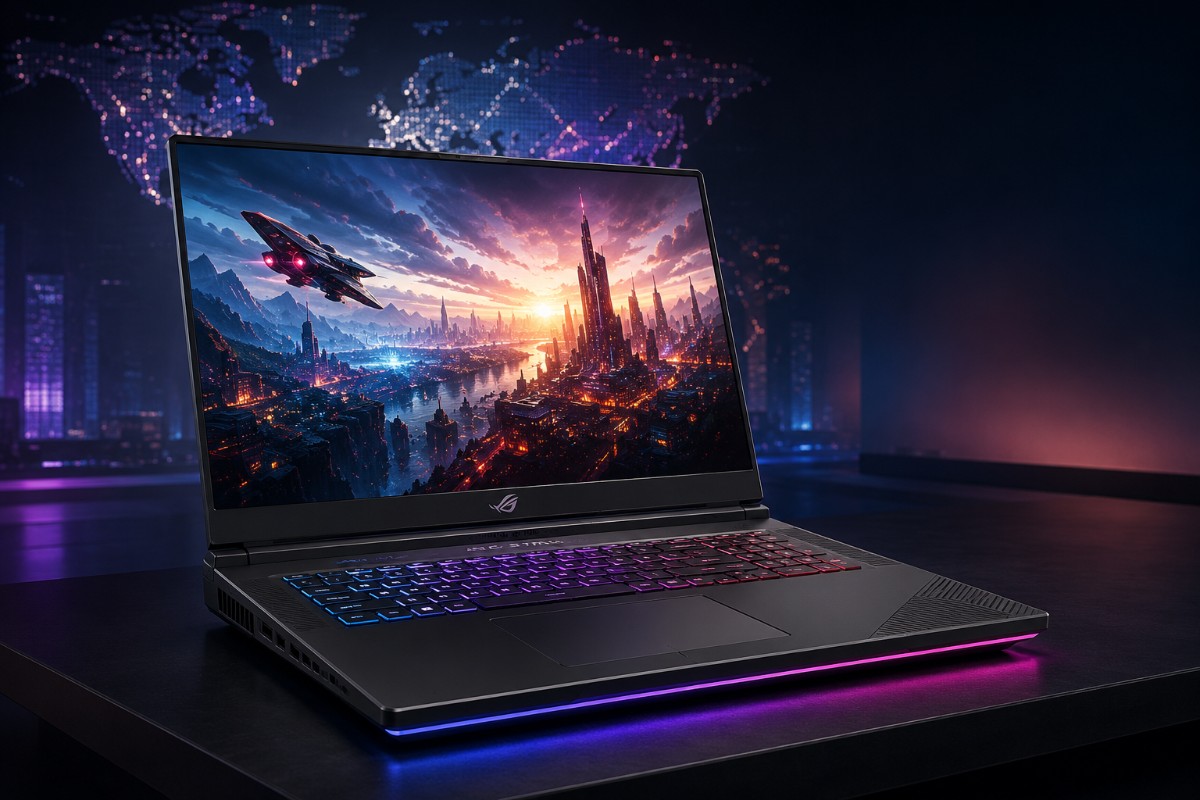
Asus ROG Strix G18: The 2026 model pairs a much brighter screen with modest CPU gains and a confusing mix of regional specifications.
Asus is expanding global availability for the 2026 ROG Strix G18. The updated 18 inch gaming laptop reaches more markets with Intel’s Core Ultra 9 290HX Plus processor and graphics options ranging from the GeForce RTX 5060 to the RTX 5080.
The display is the real attraction. Higher priced builds offer a 2.5K Mini LED panel with a 240 Hz refresh rate, more than 2,000 local dimming zones, and peak brightness of 1,200 nits. Cheaper versions use a standard 500 nit IPS panel that can reach 300 Hz, but only when Ultimate GPU mode is enabled.
Asus is selling very different machines under the same name. Screen technology, graphics, ports, memory, and storage vary by market and price tier. Buyers will need to examine the full specification sheet rather than trust the badge alone.
The Screen Is the Real Upgrade
Mini LED backlighting lets separate parts of the screen brighten or darken independently. That should improve black levels, highlights, and HDR contrast compared with a conventional IPS panel. Asus also lists full DCI P3 color coverage, G Sync support, and anti glare treatment.
The standard IPS screen wins on headline refresh rate at 300 Hz. The Mini LED version stops at 240 Hz, but its stronger brightness and local dimming should matter more in cinematic games, films, and creative work.
Asus called the 2026 ROG Strix G18 an “absolute beast” in its launch teaser, but the brighter display offers a more convincing upgrade than the refreshed processor. For many buyers, that screen will be the clearest reason to choose the 2026 model.
The Processor Barely Moves the Needle
Intel’s Core Ultra 9 290HX Plus is the confirmed processor name for the higher G18 tiers. It carries 24 cores and 24 threads, but it is a refresh rather than a major architectural change.
Notebookcheck’s current processor database places it about 3 percent ahead of the Core Ultra 9 285HX in overall performance and roughly 6 percent ahead in Cinebench R23 multicore testing. Those results come from several third party laptops, not every retail G18 build, so they remain an early guide.
Graphics power also stays familiar. The RTX 5080 Laptop GPU can run at up to 175 W, the same maximum used by the 2024 Strix G18 with an RTX 4080. Nvidia’s newer architecture may improve performance and features, but Asus has not raised the headline power limit.
At 3.2 kg with a 90 Wh battery, this remains a desk focused machine. Asus has removed the usual bottom panel screws from the routine upgrade process. Sliding a lever releases the outer cover and exposes the RAM, SSD slots, and fans without a screwdriver. Q Latch retainers also secure the SSDs without small mounting screws. The tool free claim ends there, however. Full repairs and deeper internal disassembly still require conventional tools.
The Global Rollout Comes With Fine Print
Current listings link the port differences to hardware tiers. RTX 5060 versions in Canada and parts of Europe use a single Thunderbolt 4 port, while RTX 5070 Ti and RTX 5080 builds list 2 Thunderbolt 5 ports.
Entry configurations start at CAD 3,099 in Canada and €2,699 in the Eurozone. RTX 5070 Ti models begin at $3,299 in the United States, while a UK build with RTX 5080 graphics and the Mini LED screen costs £3,699.
The Mini LED panel remains the strongest reason to pay the upgrade premium. Intel’s refreshed processor keeps the G18 competitive, but it is unlikely to make last year’s high end model feel obsolete.
Also Read: Asus TUF Gaming A18 Review: A Giant Laptop That Lasts 13 Hours

Anup Singh is an independent technology journalist and content writer covering Apple, Android, AI, laptops, gaming, and the consumer tech industry. He focuses on delivering factual, well researched, and easy to understand reporting while explaining how new technologies impact everyday users.
1 thought on “Asus ROG Strix G18 Hits Global Markets With 1,200 Nit Mini LED Display”