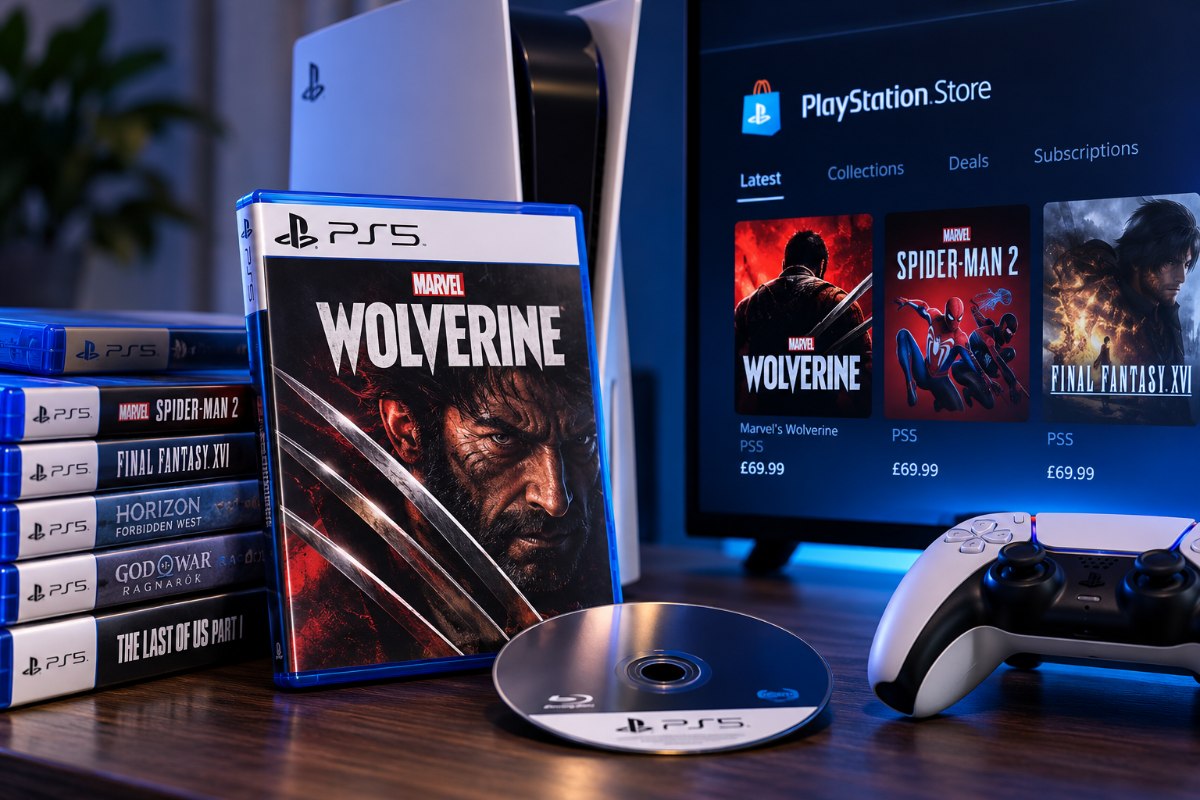
Wolverine physical sales: Marvel’s Wolverine sold more physical copies than digital versions across tracked European markets, raising questions about Sony’s decision to end disc production for new PlayStation games.
Sony’s decision to eliminate physical discs for new PlayStation releases by January 2028 is colliding with strong demand for boxed games. September 2026 sales figures show that many PS5 owners still prefer physical copies, particularly in Europe.
Marvel’s Wolverine recorded 35% of its worldwide sales through physical editions, based on estimates from Ampere Analysis. Digital downloads captured the remaining 65%, maintaining their global lead. However, Games Sales Data (GSD) reported that physical copies accounted for 51% of Wolverine’s sales across its tracked European markets. The figures suggest that Sony’s transition will affect more than a small group of collectors.
Sony officially confirmed its plans on July 1, 2026. In a PlayStation Blog announcement, Sid Shuman, Senior Director of Content Communications at Sony Interactive Entertainment, said disc production for all new PlayStation releases would end in January 2028. Games released on disc before that date will remain unaffected by the production policy.
Wolverine Sales Reveal a Sharp Regional Divide
European sales data reveals substantial differences in how players purchase games.
In France, more than 66% of Wolverine sales came from physical copies. The UK showed almost the opposite pattern, with approximately 66% of purchases made digitally.
Wolverine was not an isolated example. Silent Hill: Townfall generated more than 45% of its reported sales through physical editions. Rebel Wolves’ The Blood of Dawnwalker recorded 36% physical sales on PS5, while Capcom’s Onimusha: Way of the Sword reached 30%.
These results show that discs still generate meaningful revenue for major releases, even as digital purchases dominate overall.
“People have a need to collect. That’s where physical sales are still incredibly relevant for the consumer market,” said gaming industry analyst Joost van Dreunen.
The geographical split also complicates Sony’s global strategy. Removing physical distribution may align with consumer habits in some countries while taking away a popular purchasing option in others.
Sony’s Digital Strategy Offers Higher Margins but Raises Concerns
Digital distribution removes manufacturing, packaging, and shipping expenses. It also gives Sony greater control over sales through the PlayStation Store.
Storefront commissions are another financial incentive. A UK class action lawsuit alleges that Sony charges a 30% commission on digital purchases and uses its position to impose excessive prices. Sony contests those allegations, which should not be treated as established findings.
Physical games introduce competition that digital storefronts cannot always match. Retailers can independently discount boxed copies, sometimes within weeks of release. Players can also purchase used games at lower prices.
Digital games receive discounts too, but PlayStation buyers have fewer competing storefronts for downloadable console games.
The distinction extends to ownership. PlayStation’s terms describe digital purchases as personal licences that generally cannot be transferred or resold.
Physical copies offer resale and lending options, although some games still require downloads or online services. Server shutdowns can affect access to certain titles regardless of format.
Players Question What Happens After 2028
On Reddit’s r/PhysicalGames community, Wolverine’s sales figures prompted debate about Sony’s decision.
Some players viewed the 35% physical share as evidence that discs remain commercially important. Others argued that digital purchases already lead by a considerable margin, making Sony’s decision understandable from a business perspective.
Neither position establishes how physical buyers will behave after 2028.
Some may switch to digital purchases. Others could spend less on new PlayStation games or consider competing platforms.
Sony has confirmed that existing disc releases will remain unaffected by the production change. However, newly released games will only be available digitally from January 2028.
September’s sales figures expose the commercial challenge. Sony can reduce distribution costs and strengthen its digital business, but it risks losing customers who value retail discounts and physical game ownership.
The next 15 months will test whether those customers are willing to change their purchasing habits or whether Sony’s digital transition comes at a cost to consumer loyalty.
Also Read: GTA 6 Collector’s Box Costs $400, But You Still Have to Buy the Game

Anup Singh is an independent technology journalist and content writer covering Apple, Android, AI, laptops, gaming, and the consumer tech industry. He focuses on delivering factual, well researched, and easy to understand reporting while explaining how new technologies impact everyday users.
1 thought on “Wolverine Physical Sales Complicate Sony’s 2028 Disc Phaseout”