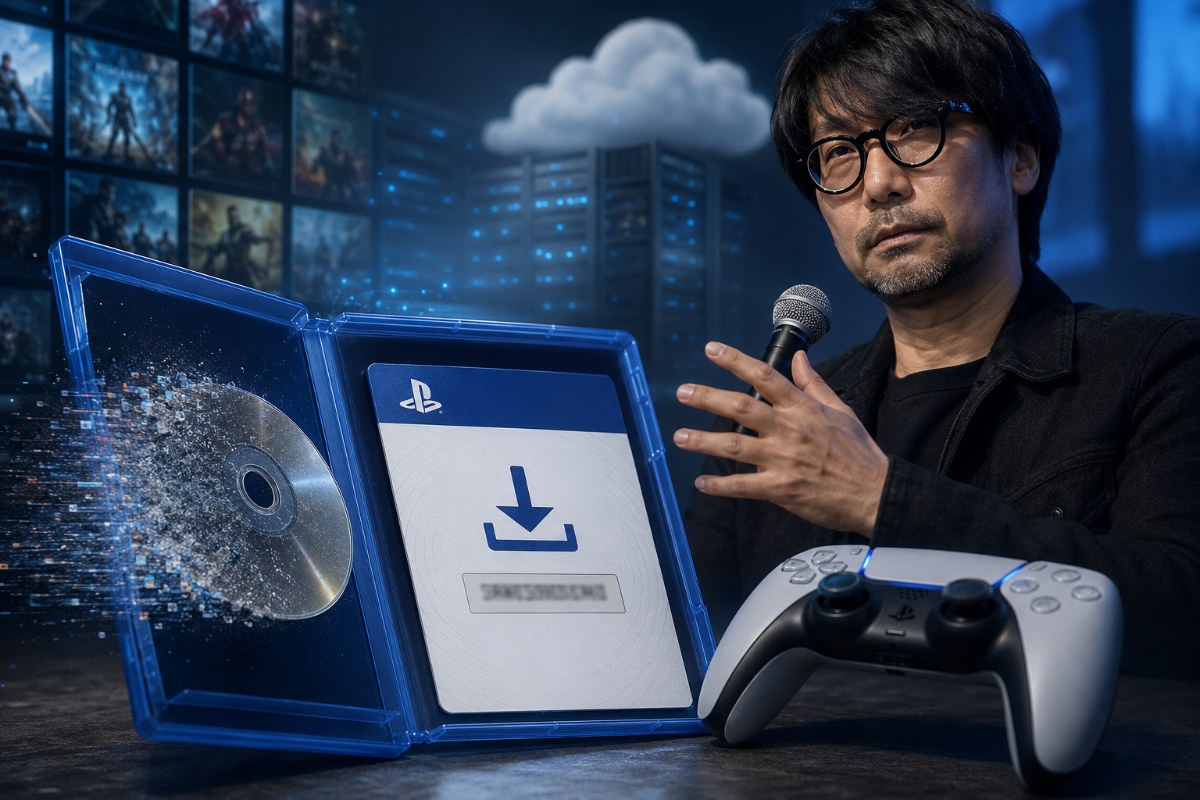
PlayStation Disc Exit: Sony’s 2028 plan keeps retail boxes alive, but the disc inside is disappearing, and that changes what players actually control.
When Sony announced it will stop producing physical PlayStation game discs in January 2028, it did more than anger collectors. It gave Hideo Kojima’s warnings about digital ownership a new and immediate target. The company says new games will still be available through PlayStation Store and at retailers, but retail copies will move to digital formats only. In plain terms, players may still see boxes on shelves, but those boxes can carry download codes instead of discs. Sony will not alter the physical release plans for games launching before the 2028 cutoff. That distinction matters because the company is not ending retail. It is ending the disc as the durable copy inside the box. For players who lend, resell, preserve, or collect games, that shift cuts directly into the old idea of ownership.
Kojima Sees The Bigger Risk Beyond Discs
Kojima reacted to the PlayStation decision at the Il Cinema in Piazza film festival in Rome. He said he grew up with physical media and called the end of disc production sad. His larger concern, though, was not only about game boxes. It was about a future where media works like streaming, with companies controlling the servers and users only receiving access.
That warning carries more weight because games already sit between ownership and access. When you buy a digital game, you get a license tied to an account, a store, and a platform. That may work for years. It can also depend on licensing deals, server support, and corporate policy changes.
Kojima warned that companies can let users “turn the tap” for a monthly fee, but if distribution stops, people may lose access to the movies and games they like.
His older 2021 warning now reads like background, not the main story. Kojima had already argued that digital data may stop being controlled by individuals. The 2028 PlayStation shift makes that concern feel less theoretical.
Sony’s Business Case Is Clear
From a business view, Sony’s move makes sense. Reuters reported that digital downloads made up about 80 percent of Sony’s full game software sales in fiscal 2025. Printing discs, shipping boxes, managing returns, and sharing shelf space with retailers all add cost.
The market is also moving before 2028. Rockstar’s Grand Theft Auto VI, one of the most important upcoming console releases, is set to launch with physical cases that contain download codes instead of discs. That example shows the industry is not waiting for Sony’s deadline to test a disc free retail model.
The same strategy that saves companies money also removes choices that players have relied on for decades. Once the disc disappears from the box, buyers lose the easy ability to lend, resell, trade, or keep a working copy without relying entirely on Sony’s servers. That is why the consumer reaction has been sharper than a normal format change.
Some players fear higher prices if physical retail competition fades. Others worry about losing the secondhand market, which helps lower income players buy games after launch. A few brands and public figures have mocked the move online, but the sharpest criticism is practical: without discs, players lose one of the few remaining ways to separate a purchase from a storefront account.
The Studio Canal Case Shows The Risk
The debate is not only about future games. Sony recently removed more than 500 purchased Studio Canal movies from some PlayStation users’ libraries because licensing agreements expired. That case shows why many players distrust the word “purchase” in digital storefronts.
Games face similar preservation risks. Without discs, players can lose access to original version 1.0 builds that matter to speedrunners, modders, researchers, and game historians. Patches can improve games, but they can also erase bugs, mechanics, balance quirks, and launch day versions that form part of gaming history.
Physical discs did not solve every problem. Many modern games still need updates or online checks. Yet discs gave players a baseline copy that existed outside a storefront’s daily control.
Sony Now Has A Trust Problem
Sony can still make the 2028 transition work, but it needs more than broad language about consumer trends. Players need clear guarantees that digital purchases will remain downloadable across hardware generations. They also need stronger refund rules, better account recovery, and plain terms that explain what happens if a license expires.
Kojima’s warning lands because it matches a real consumer fear. Players are not only asking how they will buy games after 2028. They are asking whether buying will still mean owning in any meaningful sense. If Sony wants players to accept a disc free PlayStation future, it has to prove their libraries will not vanish when servers, licenses, or business priorities change.
Also Read: ThundeRobot ZERO Air 16 Shrinks RTX 5070 Power Into A 1.64kg Chassis

Anup Singh is an independent technology journalist and content writer covering Apple, Android, AI, laptops, gaming, and the consumer tech industry. He focuses on delivering factual, well researched, and easy to understand reporting while explaining how new technologies impact everyday users.
1 thought on “Sony’s PlayStation Disc Exit Validates Hideo Kojima’s Ownership Warning”