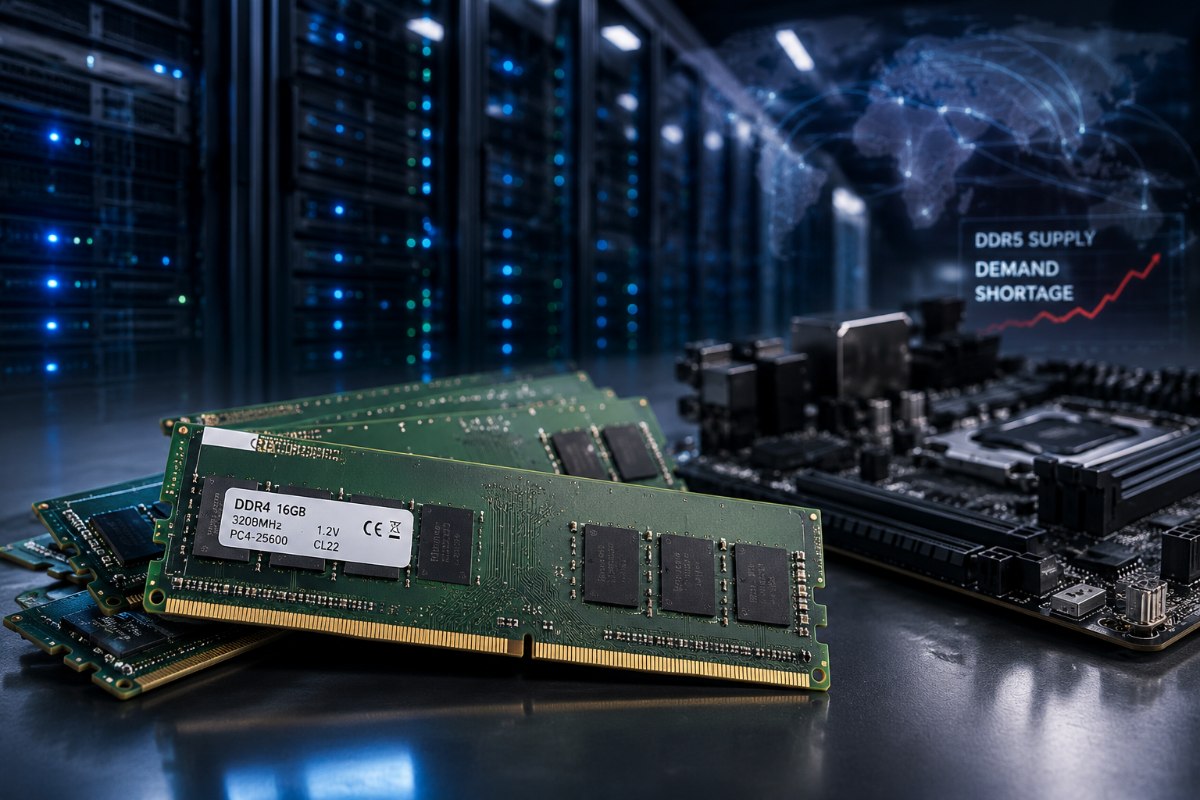
DDR4 is returning to modern hardware plans as AI demand, DDR5 shortages, and rising memory costs squeeze both consumer PCs and enterprise servers.
The tech industry’s AI boom has quietly distorted the memory market, forcing PC makers and hyperscalers to bring DDR4 back into plans that were supposed to center on newer standards. DDR5 remains the long term path for performance PCs and modern servers, but tight supply and rising costs are changing short term decisions across the industry. Hardware vendors are scrambling to adjust to a market where modern memory is scarce and prohibitively expensive. Motherboard makers are reviving DDR4 platforms. Mini PC vendors are still choosing older memory to protect entry level pricing. Data centers are going even further, reusing decommissioned DDR4 inside new DDR5 server designs. This is not a nostalgic comeback for legacy hardware. It is a survival tactic for a market being priced out of the latest memory standards.
AI Has Turned Memory Into A Capacity Fight
The main pressure comes from AI infrastructure. Training and inference systems need huge pools of DRAM, and AI accelerators depend heavily on High Bandwidth Memory, or HBM. That matters because HBM uses advanced manufacturing capacity that could otherwise support more conventional DDR products.
As chipmakers chase higher margin AI memory, the traditional memory chain gets squeezed. DDR5 becomes harder to source. DDR4 production, which was supposed to wind down, suddenly looks useful again. Even older DDR3 parts are seeing renewed demand as buyers search for anything available at workable prices.
DDR4 spot prices recently jumped 2.22% in a single week, a clear sign that the shortage is cascading down the stack rather than staying locked to newer platforms. That is why Wccftech’s line that “from PCs to servers, DDR4 memory is back in action as DDR5 shortages continue” fits the moment so neatly. It is an awkward reality for the tech industry: old memory now helps protect margins in a market where the newest parts are no longer easy to price into mainstream hardware.
Meta Shows How Far Data Centers Will Go
The most important example is Meta’s Vistara architecture. This is not a lab sketch. At ISCA 2026, Meta presented a concrete CXL 2.0 ASIC designed to reuse DDR4 modules from decommissioned servers inside new AMD Turin systems that normally rely on DDR5.
Each MemServer pairs 768GB of DDR5 with 256GB of recycled DDR4, creating a 1TB memory pool. The DDR5 tier handles hotter data that needs faster access. The CXL attached DDR4 tier holds colder pages that still need to remain closer than storage.
That design gives Meta a way to stretch usable memory without buying entirely new DRAM for every workload. It also reduces waste by keeping server grade DDR4 modules in circulation for longer. For AI inference fleets, reports around the design point to server count reductions of up to 25%, which turns memory reuse into a major infrastructure cost lever.
CXL makes the setup possible by letting processors attach extra memory through PCIe as a separate pool. The tradeoff is speed. DDR4 does not become DDR5. It simply becomes useful in a tiered system where not every byte needs the fastest path.
PC Builders Get The Squeeze Next
The same pressure is now hitting everyday buyers. While DDR4 prices are also climbing, they still undercut DDR5 enough to rescue profit margins on budget PCs.
That is why older sockets such as AMD AM4 are not disappearing as quickly as expected. DDR4 ready motherboards and older Ryzen 5000 chips still make sense when a full DDR5 build forces buyers into a more expensive motherboard, processor, and memory bundle at the same time.
Mini PCs are another practical example. Vendors can ship new compact systems with DDR4 and avoid pushing the final price too high. Performance focused buyers will still want DDR5, but budget builders are effectively locked into older platforms for longer than the original upgrade cycle suggested.
For buyers, raw speed is no longer the only concern. Availability and total platform cost now matter just as much.
DDR5 Still Wins The Roadmap
None of this changes the long term direction. DDR5 remains the standard for modern performance PCs and new server platforms. It offers more bandwidth and a cleaner path for future processors.
The near term reality looks messier. AI demand is pulling the memory market upward. Data centers are engineering around shortages. PC vendors are extending older platforms because customers still need affordable systems.
Ultimately, the market does not care about the roadmap if it cannot afford the silicon. Until DDR5 supply stabilizes, vendors will keep building around whatever memory they can actually source.
Alson Read: Nothing’s $99 Ear 3a Adds Local Storage For Instant Audio Snapshots

Anup Singh is an independent technology journalist and content writer covering Apple, Android, AI, laptops, gaming, and the consumer tech industry. He focuses on delivering factual, well researched, and easy to understand reporting while explaining how new technologies impact everyday users.
1 thought on “Soaring Memory Costs Force PC Makers And Data Centers To Resurrect DDR4”