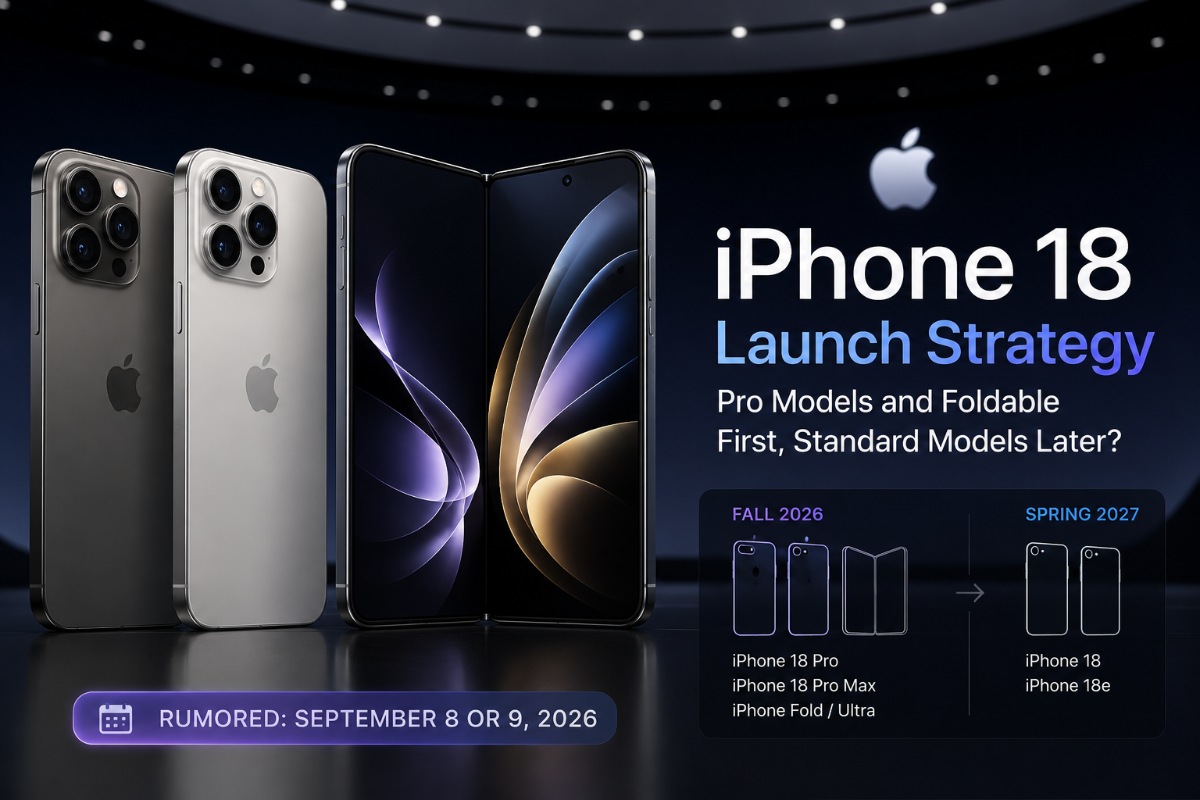
iPhone 18 Launch Strategy: Apple may reshape its usual September iPhone rhythm by putting Pro models and its first foldable device ahead of the standard lineup.
For years, an Apple September event meant a new iPhone lineup for almost every major buyer. The latest iPhone 18 leak suggests that familiar rhythm may be changing.
Apple has not confirmed the iPhone 18 event date, model names, pricing or release schedule. Still, current reporting points to a September 8 or September 9 keynote for the iPhone 18 Pro, iPhone 18 Pro Max and Apple’s first foldable iPhone. The rumored foldable could arrive under a name such as iPhone Ultra or iPhone Fold.
Those dates are being discussed partly because Labor Day falls on September 7 in 2026. Apple often works around holiday travel, press logistics and retail preparation when setting its early September calendar.
The larger change involves the standard models. The regular iPhone 18 and iPhone 18e, expected to serve as Apple’s newer entry level tier, may not arrive until spring 2027.
Apple’s September Event May No Longer Mean A Full Lineup
Splitting the release would change how buyers approach the next iPhone cycle. A September event would no longer guarantee a complete lineup refresh.
By launching premium models first, Apple can build its fall strategy around higher margins, Apple Intelligence upgrades and the rumored A20 chip. The company would also give its first foldable more room to stand apart from the standard iPhone.
Preorders, shipping dates and carrier campaigns decide how quickly Apple turns a launch into sales. Bloomberg tech reporter and Apple analyst Mark Gurman pointed to the same practical window when asked about preorder timing.
“They could do them on Sept 10,” Mark Gurman said.
If the standard iPhone does move to 2027, carriers may need to adjust their holiday sales plans. That could mean stronger iPhone 17 discounts, longer financing offers or a harder push toward higher priced Pro upgrades.
The Foldable iPhone Brings A Different Kind Of Pressure
Apple would not be entering a new category in isolation. Samsung’s Galaxy Z Fold line and Google’s Pixel Fold devices have already tested the market for large folding phones.
Waiting allowed Apple to learn from rival missteps. Engineers have had more time to study screen creases, hinge durability, app scaling, battery life and the challenge of making a foldable feel like a normal daily phone.
That does not mean Apple’s version will automatically solve the category’s problems. Foldables still cost more, weigh more and ask users to accept tradeoffs that standard phones avoid. Apple’s advantage may come from software polish, chip efficiency and the way Apple Intelligence works across a larger folding display.
Product complexity now becomes a communications challenge. A foldable iPhone, a possible Ultra label and a delayed standard model would make this lineup harder to explain than a normal annual refresh, especially for buyers who expect every major iPhone to arrive together.
Standard Buyers May Face The Biggest Change
Early reactions on X show confusion from buyers who expected the usual unified fall lineup. One user asked, “Wait, what’s the Ultra thing? Foldable iPhone?” Another asked whether Apple had confirmed no base iPhone for the year.
Those questions are reasonable. Apple’s naming already appears crowded, with Pro, Pro Max, the rumored thin profile Air, e and a possible Ultra or Fold label all in the conversation. The company will need a clean message if it separates premium buyers from standard buyers by several months.
Nothing is final until Apple announces it. But if the split release holds, the iPhone 18 cycle would mark more than another yearly upgrade. It would change when buyers shop, what carriers promote and which customers Apple puts first during its most important sales season.
Also Read: ThundeRobot ZERO Air 16 Shrinks RTX 5070 Power Into A 1.64kg Chassis

Anup Singh is an independent technology journalist and content writer covering Apple, Android, AI, laptops, gaming, and the consumer tech industry. He focuses on delivering factual, well researched, and easy to understand reporting while explaining how new technologies impact everyday users.