Sony’s Digital Future: 2028 disc cutoff makes the used game economy look less like nostalgia and more like consumer leverage.
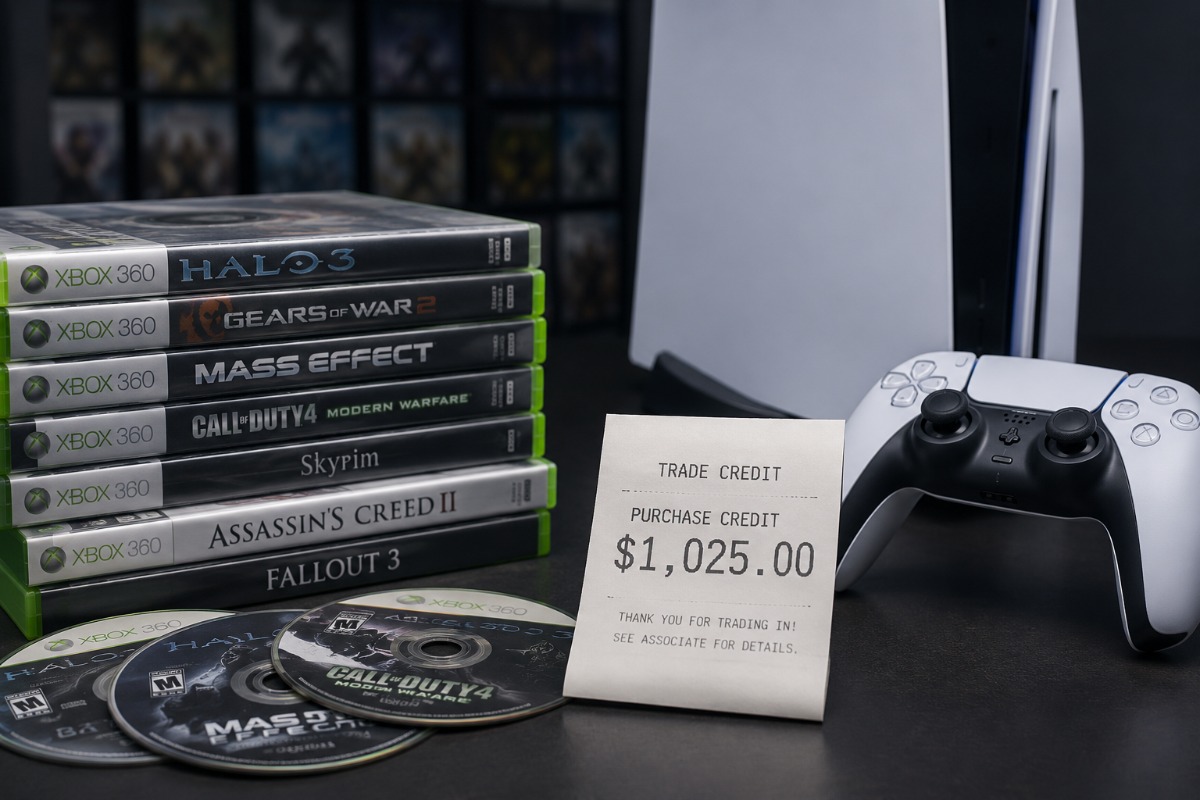
A gamer in Ohio just walked out of GameStop with more than $1,000 in store credit. That payout now reads differently after Sony confirmed that physical disc production for all new PlayStation games will end in January 2028. Starting then, new PlayStation releases, including Sony published games and third party titles, will be sold in digital formats only. Games already released on disc, or already scheduled before the cutoff, will not be affected.
The customer traded an old Xbox 360 collection at a Columbus store, used part of the credit on PS5 games, and still left with more than $650 on a trade card. GameStop has not publicly broken down whether the payout reflected standard trade values alone or included any temporary promotion. That detail matters because it limits how far one transaction can be used to judge the resale market. Still, the trade put a real cash number on what physical ownership can still give players.
Sony’s Business Logic Is Hard To Miss
Sony is not forcing this shift in a vacuum. Console players have been choosing downloads over discs for years, and reports around the decision put current PlayStation digital sales at roughly 80% of game purchases.
That gives Sony a clear business case. Digital distribution cuts manufacturing, shipping, packaging, and retail shelf costs. It also gives platform holders tighter control over pricing and store placement. More importantly, the closed ecosystem lets them shape refunds, subscriptions, discounts, and post launch sales without the same pressure from used game bins or competing retailers.
Players also get obvious convenience. They can buy, download, and store digital games instantly, freeing up physical shelf space. For users who already buy most games online, the 2028 cutoff may not change daily habits very much.
The GameStop Trade Shows What Digital Cannot Replace
The concern is not convenience. It is leverage. Once new discs vanish, players lose their clearest escape hatch from platform controlled stores.
“One customer brought in his Xbox games and received $1,000 back in trade credit,” a GameStop spokesperson told MarketWatch.
That quote explains why the Ohio trade spread so quickly. You can hand a disc to a friend, sell it online, display it on a shelf, or trade it toward another console game. A digital purchase usually stays locked to an account, a storefront, and the rules attached to both.
While going digital saves publishers money, physical games remain a practical currency for players who trade, share, and collect. For budget conscious users, that matters. A used disc can lower the cost of staying current. A digital library cannot be liquidated in the same way.
Gamers Are Focused On Ownership, Not Just Nostalgia
Gamers did not react to the trade as a simple feel good story. Some questioned whether the payout was fair without knowing the size or condition of the full collection. Others focused on a larger issue: future PlayStation games may no longer have resale value at all. Beneath the jokes about low trade offers was a familiar frustration with the used game economy. Players know a disc can be worth very different amounts depending on whether it is sold to a store, sold directly to another player, or kept until it becomes collectible.
That reaction is rough, but the concern behind it is serious. Digital stores do not stay open forever. Microsoft shut down the Xbox 360 Store and Xbox 360 Marketplace on July 29, 2024, ending new purchases of games, DLC, and entertainment content through those legacy channels. Existing purchases remained downloadable under Microsoft’s stated policy, but the closure still showed how quickly an older digital storefront can move from active marketplace to archive.
Sony’s move may match where the market is already going. It also shifts more power from players and retailers to platform owners. Discs may be marching toward obsolescence, but as that GameStop credit proves, their financial value remains very real right up to the end.
Also Read: Valve’s $1,049 Steam Machine Risks Losing Enthusiasts To Custom PC Builds

Anup Singh is an independent technology journalist and content writer covering Apple, Android, AI, laptops, gaming, and the consumer tech industry. He focuses on delivering factual, well researched, and easy to understand reporting while explaining how new technologies impact everyday users.
1 thought on “What A $1,000 GameStop Trade Tells Us About Sony’s Digital Future”